
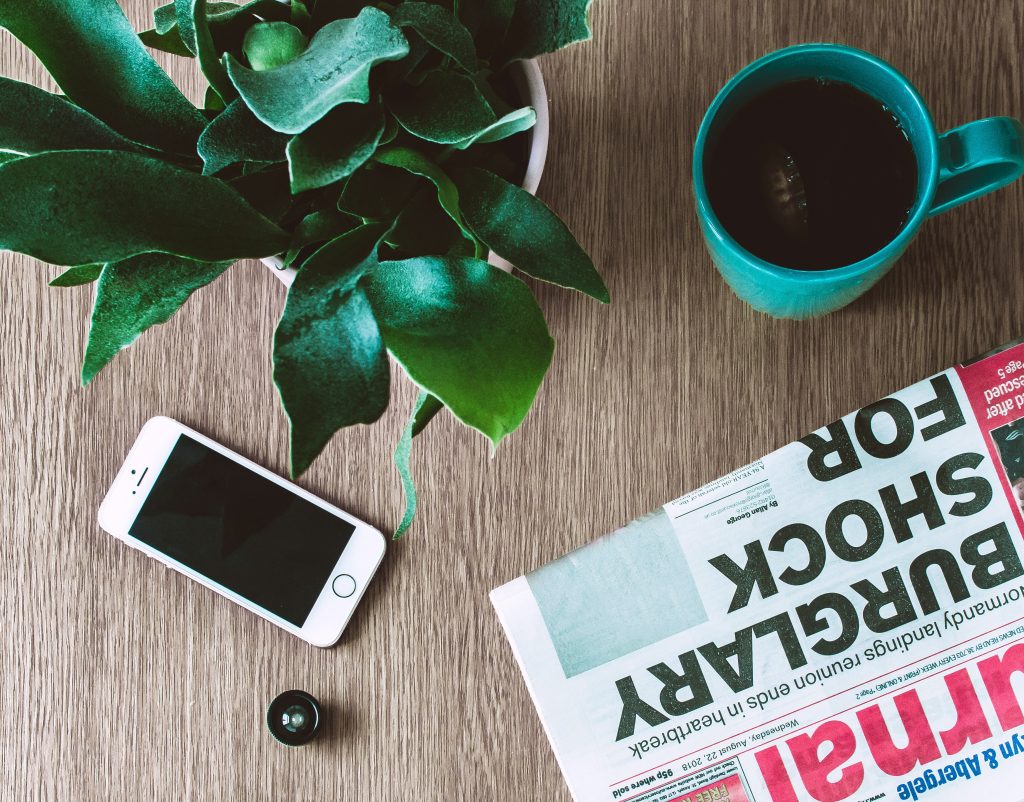
Hello there! Let's talk about that daily ritual that almost all of us participate in: reading the news. It seems like it's been a part of our lives for centuries, doesn't it? But what does all that news do to our minds and our mood? You'll find out below!
The Fascinating World of News
News is an intriguing phenomenon. It has been around for decades, and for many, it's a regular part of their morning routine. From reading the newspaper at breakfast to news apps on our smartphones, we can hardly do without it. The question is: why?
News has always been a significant part of society. Our ancestors had their own ways of staying informed, such as community gossip, but modern news media began to thrive in the 19th and 20th centuries with the rise of newspapers and radio. Today, we have 24/7 news channels and online platforms that can update us at any time of the day.
The Negative News Spiral
Let's be honest, most of the news that makes headlines isn't the most uplifting. It seems like negative stories dominate the front pages. But why is that?
This is due to the "Negative Bias." It's in our nature to pay more attention to negative information, a mechanism that once served as a survival strategy to help us recognize and avoid dangers. This bias not only affects journalists, who are often inclined to emphasize negative events because they are considered more newsworthy, but it also plays a role in our choices as readers.
It is a fact that our brains consider negative events as more important, and this affects our preference for news stories. The result is that we are more likely to read a newspaper, or, more importantly, buy one when shocking news dominates the front page. However, excessive exposure to negativity can affect our mood and reinforce our perception of the world as unsafe and uncertain, leading to stress and gloom.
Information Overload and Your Brain
Your brain has a limited processing capacity, and it is often exceeded. Your brain is not designed to constantly process an abundance of information. It's like an endless conveyor belt of facts and figures, and your brain can't keep up. This can lead to stress, confusion, and overload.
How much is too much? Experts suggest that the human brain can process a maximum of about 5-9 pieces of information at a time. Considering the number of news articles and updates we encounter each day, you can imagine that this is a significant challenge for our brains. This information overload can contribute to stress, confusion, and even sleep problems.
So, what can we do to keep our minds healthy without completely ignoring the news?
Practical Tips for News Consumption
What can we do to find a balance between information and mental peace? Here are some useful tips:
Limit Your News Consumption:
Stel vaste tijden in om het nieuws te lezen of bekijken, en vermijd overmatige blootstelling. Je zou kunnen beginnen met bijvoorbeeld 1x per week in plaats 1x per dag het nieuws te lezen.
Choose Reliable Sources:
Selecteer nieuwsbronnen die vertrouwd en accuraat zijn. Er gaat vaak veel nep nieuws rond wat bedoelt is voor sensatie of om angst aan te jagen.
Variety in Your Intake:
Wissel af tussen nieuwssoorten om je humeur op te vrolijken. Je hebt tegenwoordig ook kanalen die zich alleen maar richten op positief nieuws.
Talk About It:
Deel je gevoelens en gedachten over het nieuws met vrienden of familie.
Awareness and a Fresh Start
One good thing to try is to reflect on how you feel after reading or watching the news; do I feel better now or not at all? For me personally, this means I don't start my day with news. I prefer to spend my morning focusing on what I want to achieve that day. My brain already has enough to think about with my to-do list, without the additional worries from the news I just read.
I do want to stay informed about what's happening in the world, but in moderation. The key question I ask myself is, "How does this news contribute to my life?" I can't resolve a war raging thousands of kilometers away, but I can contribute in the form of donations to organizations that provide aid. I can also gain a broader perspective on the world, but I don't need to stay updated daily. It's about finding a balance between awareness and mental peace. What best suits your needs and well-being? That's ultimately the question we should ask ourselves when dealing with news.
All the love, Sabine
 English
  Dutch
Dutch